The Complete Subsidence Guide for London Properties
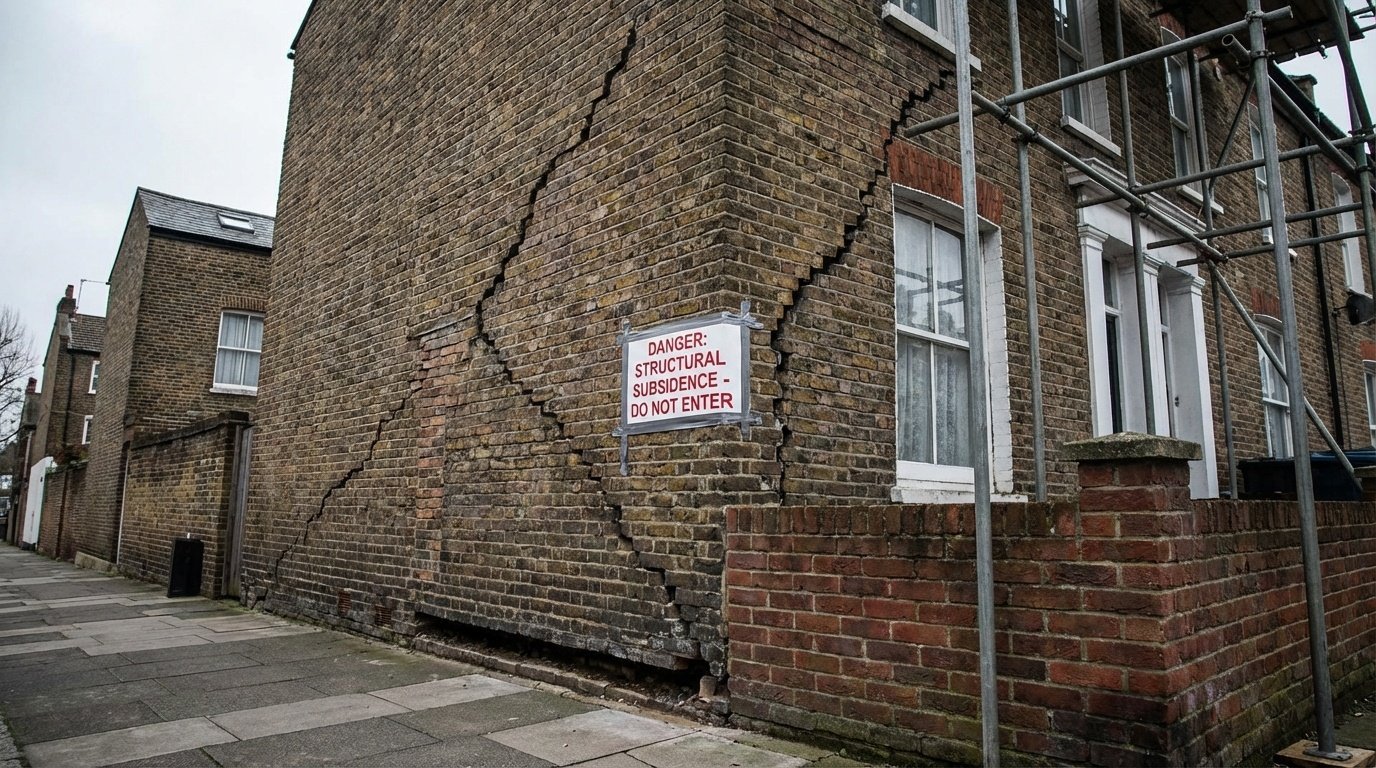
Introduction: Understanding Subsidence in London
Subsidence—the downward movement of ground beneath buildings—affects thousands of London properties annually, causing structural damage, property devaluation, and expensive repairs. In West End London, where Victorian and Georgian properties sit on London Clay foundations, subsidence risk is particularly acute. As RICS surveyors who assess subsidence across Westminster, Kensington, and Chelsea, we provide the expert guidance property owners need to identify, address, and prevent foundation problems.
This comprehensive guide explains subsidence causes, identification methods, repair solutions, insurance considerations, and preventative measures—everything London property owners and buyers need to know about this serious structural issue.
What is Subsidence?
Subsidence occurs when ground beneath foundations moves downward, causing buildings to sink or settle unevenly. This differs from:
- Settlement: Normal downward movement as new buildings compress ground—expected and generally harmless
- Heave: Upward ground movement (opposite of subsidence) when clay soils expand after moisture increase
- Landslip: Lateral ground movement on slopes
True subsidence causes progressive structural damage requiring intervention. In London, clay shrinkage during dry periods causes most subsidence cases.
London Clay and Subsidence Risk
Much of West End London sits on London Clay—a highly shrinkable soil that expands when wet and contracts when dry. During dry summers, clay loses moisture and shrinks, causing ground beneath foundations to drop. This seasonal movement affects millions of London properties.
High-Risk Areas in West End London:
- Areas with mature trees (tree roots extract moisture from clay)
- Properties on shallow foundations (pre-1900 buildings)
- South-facing slopes (increased sun exposure dries soil)
- Areas near construction activity (excavation affects ground stability)
- Properties with leaking drains (water softens clay, causing failure)
Identifying Subsidence: Warning Signs
Structural Cracks
Not all cracks indicate subsidence, but certain patterns suggest foundation movement:
Severe Cracks (Likely Subsidence):
- Diagonal cracks wider than 3mm (particularly widening at top or bottom)
- Cracks near doors and windows (especially stepped cracks in brickwork)
- Cracks visible both internally and externally in same location
- Cracks that widen after initially being repaired
- Horizontal cracks in walls (especially at ceiling-wall junctions)
Minor Cracks (Likely Harmless):
- Hairline cracks less than 1mm wide
- Cracks only in plaster, not underlying masonry
- Vertical cracks at wall junctions (expansion/contraction)
- Cracks that don't widen over time
Other Subsidence Indicators:
- Doors and windows sticking: Frames distort as building moves
- Rippling wallpaper or plaster: Wall surfaces become uneven
- Gaps appearing: Between walls and ceilings, or walls and floors
- External signs: Leaning walls, bulging brickwork, tilting chimneys
- Floor problems: Uneven floors, gaps between skirting and floor
Causes of Subsidence
1. Tree Root Activity (Most Common)
Tree roots extract moisture from clay soils, causing shrinkage. Large trees can affect properties up to 1.5x their mature height away.
High-Risk Trees:
- Oak: Influence zone 20-30m
- Willow and Poplar: Influence zone 30-40m
- Lime, Ash, Plane: Influence zone 15-25m
- Sycamore, Horse Chestnut: Influence zone 15-20m
Solution: Tree management (pruning, root barriers) or removal in severe cases (costs £500-£5,000 depending on tree size)
2. Soil Shrinkage (Clay Contraction)
Extended dry periods cause London Clay to contract significantly. Climate change is increasing subsidence frequency.
Risk Period: June-October (following dry summers)
3. Leaking Drains
Water from damaged drains softens ground beneath foundations, causing collapse.
Identification: CCTV drain surveys (£200-£500)
Repair: Drain relining or replacement (£2,000-£10,000+)
4. Mining and Underground Works
Historical mining, tunneling, or current excavation affects ground stability.
Assessment: Coal Authority mining reports, Local Authority searches
5. Soil Erosion or Washout
Water flowing beneath foundations erodes supporting soil.
Causes: Burst water mains, inadequate drainage, groundwater flow
Professional Subsidence Assessment
RICS Level 3 Building Survey
Comprehensive structural assessment identifying movement indicators, severity, and likely causes.
Cost: £900-£2,500 depending on property size
Structural Engineer Survey
Specialist investigation including:
- Crack monitoring over 6-12 months using tell-tales or electronic sensors
- Trial pit excavations exposing foundations
- Borehole investigations determining ground conditions
- Level surveys measuring structural movement
- Computer modelling predicting future movement
Cost: £800-£3,000 for initial assessment; £2,000-£10,000+ for detailed investigation
Monitoring Programs
Before expensive repairs, monitoring confirms whether movement is:
- Active: Ongoing movement requiring intervention
- Historic: Past movement that has stabilized (no treatment needed)
- Seasonal: Minor cyclical movement (tree management may suffice)
Duration: Typically 6-12 months covering seasonal variation
Subsidence Repair Methods
Underpinning
The most common subsidence repair, involving extending foundations to stable ground below.
Traditional Mass Concrete Underpinning:
Excavating beneath existing foundations in short sections, pouring new deeper concrete foundations.
Process: Sequential excavation prevents structural collapse
Cost: £1,000-£2,000 per linear meter | Typical property: £15,000-£50,000+
Duration: 6-12 weeks
Mini-Piled Underpinning:
Driving small piles through unstable ground to reach solid strata, then connecting to existing foundations.
Advantages: Less disruptive, faster, works in confined spaces
Cost: £1,500-£3,000 per linear meter | Typical property: £25,000-£80,000+
Resin Injection:
Injecting expanding resin foam beneath foundations to stabilize and lift structures.
Advantages: Minimal disruption, very fast (1-2 days)
Limitations: Not suitable for all subsidence types
Cost: £1,500-£5,000 per injection point | Typical property: £10,000-£30,000
Structural Repairs
After foundation stabilization, repairing damage:
- Crack stitching using helical bars and resin (£400-£1,200 per crack)
- Wall rebuilding in severe cases (£3,000-£15,000+ per section)
- Internal replastering (£25-£50 per m²)
- External repointing (£40-£80 per m²)
- Redecoration throughout (£5,000-£20,000+)
Insurance Claims
Buildings Insurance Coverage
Most standard buildings insurance policies cover subsidence (alongside heave and landslip). Key points:
Typical Policy Terms:
- Excess: £1,000 first claim; potentially £1,500+ for subsequent claims
- Covered: Repair costs, structural surveys, monitoring, alternative accommodation
- Excluded: Damage caused before policy started; damage from faulty design/materials
- Time limit: Notify insurers immediately when subsidence suspected
The Claims Process:
- Report damage immediately: Contact insurer as soon as subsidence suspected
- Insurer investigation: Loss adjuster and structural engineer assess damage (insurer appoints)
- Monitoring period: 6-12 months confirming active movement (claim progresses only if movement ongoing)
- Repair approval: Insurer authorizes necessary works
- Contractor appointment: Insurer-approved specialist contractors undertake repairs
- Completion: Structural certification and redecoration
Claim Impact:
- Future premiums: Increase 10-50% after subsidence claim
- Property value: Typically reduced 10-25% (even after repairs)
- Saleability: Many buyers avoid properties with subsidence history
- Mortgage difficulty: Some lenders reluctant to lend on properties with subsidence history
Buying Property with Subsidence
Essential Checks:
- Survey reports: Commission RICS Level 3 survey identifying all movement
- Repair evidence: Request structural engineer certificates confirming repair adequacy
- Insurance policies: Review previous claims and current coverage terms
- Monitoring data: Examine crack monitoring results proving stabilization
- Guarantees: Underpinning guarantees (typically 10-25 years) should be transferable
Price Negotiation:
Properties with subsidence history typically sell for 10-25% below market value, depending on:
- Whether repairs completed professionally
- Time elapsed since repairs (longer = better)
- Evidence of stabilization
- Quality of structural warranties
- Ongoing monitoring requirements
Preventing Subsidence
Tree Management:
- Maintain safe distances: Plant trees 1.5x mature height from property
- Regular pruning reduces water demand
- Root barriers prevent root growth toward foundations (£80-£150 per linear meter)
- Avoid removing established trees suddenly (causes heave as soil rehydrates)
Drainage Maintenance:
- Regular inspections identify leaks early (CCTV survey every 5-10 years: £200-£500)
- Clear gutters and downpipes preventing water ingress near foundations
- Install soakaways directing water away from buildings
- Repair damaged drains promptly
Foundation Protection:
- Maintain ground moisture levels near foundations (avoid irrigation immediately adjacent to walls)
- Ensure adequate building insurance including subsidence coverage
- Monitor existing cracks (photograph regularly to track changes)
- Professional surveys every 5-10 years identifying emerging issues
Working with West End Surveyors
Our subsidence services include:
- RICS Level 3 building surveys identifying structural movement
- Crack monitoring programs tracking foundation stability
- Structural engineer referrals for detailed investigations
- Insurance claim support and technical advice
- Pre-purchase assessments of properties with subsidence history
- Expert witness services for insurance disputes
We provide the expert subsidence assessment London property owners need for informed decisions about this serious structural issue.
Conclusion: Managing Subsidence Successfully
Subsidence is a serious but manageable issue affecting many London properties. Early identification, professional assessment, appropriate repairs, and preventative maintenance protect property values and structural integrity. Don't ignore warning signs—prompt action minimizes damage and repair costs.
Whether you suspect subsidence in your property or are considering purchasing a property with subsidence history, professional RICS surveys provide the expert insight necessary for confident decisions.