Georgian Property Buyer's Guide: Architectural Elegance Meets Modern Living
Introduction: The Timeless Appeal of Georgian Architecture
Georgian architecture represents one of Britain's most celebrated architectural periods, spanning the reigns of Kings George I through George IV (1714-1830). In West End London, Georgian properties command premium prices for their exceptional proportion, classical elegance, and historic significance. From the grand terraces of Bloomsbury and Mayfair to the elegant townhouses of Marylebone and Westminster, these properties combine architectural sophistication with significant investment potential.
However, purchasing a Georgian property requires specialist knowledge that extends far beyond conventional property transactions. As RICS surveyors with decades of experience assessing period properties across West End London, we've surveyed hundreds of Georgian buildings—from Grade I listed palaces to converted townhouse flats. This comprehensive guide provides the expert insights buyers need to navigate the complexities of Georgian property ownership successfully.
Understanding Georgian Architecture
The Georgian Periods
Georgian architecture evolved significantly across its 116-year span:
Early Georgian (1714-1760)
Characterized by Baroque influences, symmetrical facades, brick construction with stone dressings, sash windows with thick glazing bars, and simple classical detailing. Examples include many properties in Spitalfields and the earlier developments of Mayfair.
Mid-Georgian (1760-1800)
The height of Georgian elegance, featuring perfect proportion, Palladian influences, refined classical detailing, painted stucco facades (especially in prestigious areas), and increasingly sophisticated interior decoration. Prime examples found throughout Bloomsbury, Marylebone, and Westminster.
Late Georgian/Regency (1800-1830)
Moving toward Regency style with grander scale, increased ornamentation, Greek Revival influences, bow windows and curved facades, and elaborate ironwork. Notable examples in Belgravia, Regent's Park, and Pimlico.
Key Architectural Features
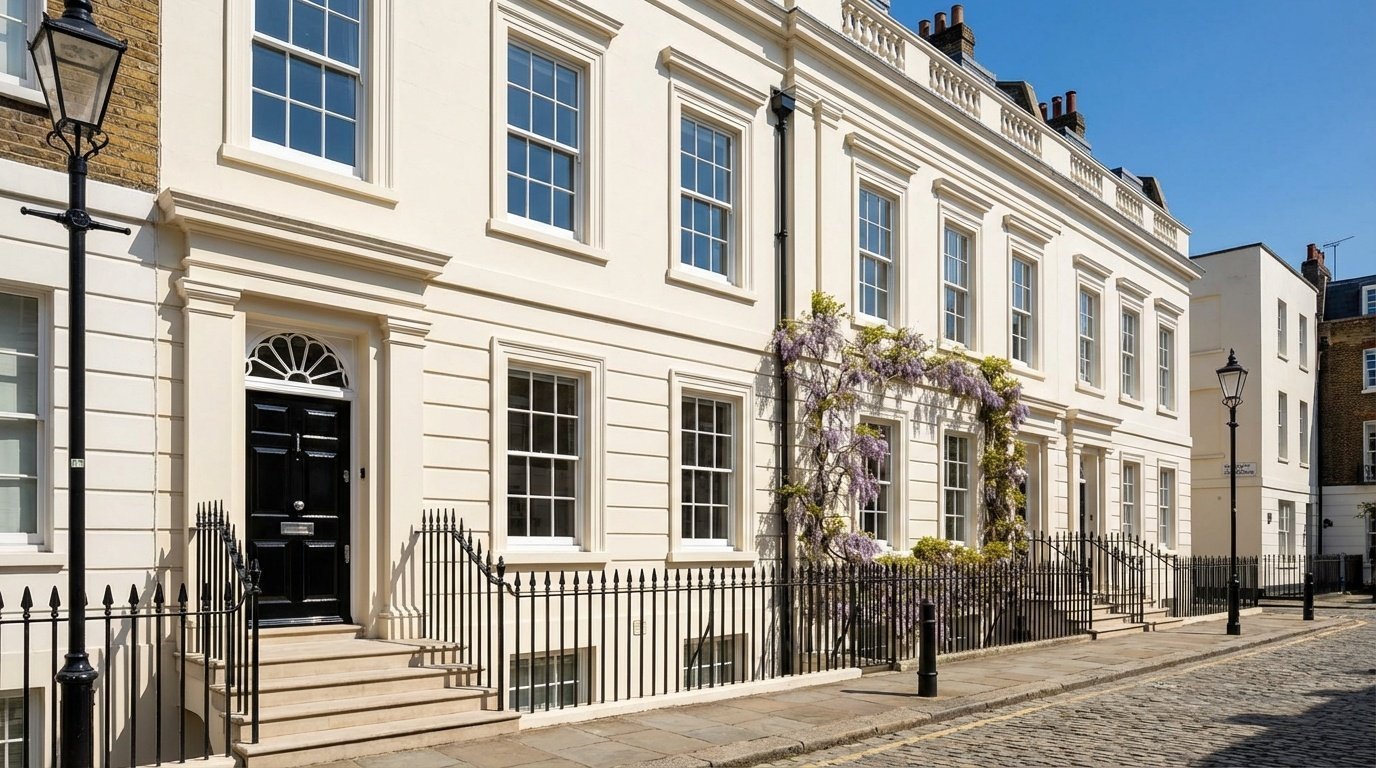
Authentic Georgian properties share distinctive characteristics:
- Symmetrical facades: Perfect balance and proportion define Georgian architecture
- Sash windows: Vertical sliding windows, typically with 6-12 panes per sash
- Classical proportions: Mathematical relationships between elements (golden ratio)
- Brick or stucco construction: London stock brick or painted stucco over brick
- Ornate doorcases: Impressive entrances with pediments, columns, and fanlights
- Interior elegance: High ceilings (3-3.5m+), elaborate cornicing, decorative fireplaces
- Formal layout: Reception rooms on principal floors, service areas in basements
The Georgian Property Survey: What to Expect
Professional surveys of Georgian properties differ fundamentally from standard building surveys. Our RICS Level 3 Building Surveys for Georgian buildings include:
Structural Assessment
Georgian buildings typically feature solid brick walls (often two bricks thick), timber floor structures, and complex roof systems. Our surveyors examine:
- Foundation movement: Many Georgian properties rest on shallow brick foundations that can be affected by ground movement, subsidence, or heave. London Clay is particularly susceptible to seasonal movement.
- Wall structures: Assessment of brick condition, pointing quality, render systems, and any structural alterations
- Timber floor joists: Original floor structures often suffer from beetle infestation, rot, or structural deflection after 200+ years
- Roof structures: Georgian roofs typically feature hand-cut timber members; we assess structural condition, slate/tile condition, and water penetration
- Historic alterations: Many Georgian properties have been significantly altered—removing walls, inserting bathrooms, creating lower-ground-floor kitchens. We assess whether alterations have compromised structural integrity.
Period Feature Assessment
Original Georgian features add significant value but require expert assessment:
- Original sash windows: Condition, operability, glazing, and draught-proofing requirements
- Historic panelling: Wood beetle infestation, moisture damage, paint layers (which may contain lead)
- Period fireplaces: Structural integrity of chimney breasts, flue condition, grate authenticity
- Decorative plasterwork: Cornices, ceiling roses, and panel mouldings—assessing for cracks, detachment, or historic repairs
- Staircases: Original Georgian staircases are often masterpieces; we check structural soundness and woodworm
- Historic flooring: Wide floorboards, parquet floors, or flagstone flooring in service areas
Building Services
Retrofitting modern services into Georgian buildings presents unique challenges:
- Electrical systems: Many Georgian properties retain outdated wiring concealed within walls and floors—rewiring costs £10,000-£25,000+
- Heating systems: Modern central heating must be installed sensitively to avoid damaging historic fabric
- Plumbing: Lead pipes still present in many properties; bathrooms and kitchens often require careful integration
- Drainage: Original drainage systems frequently require updating to meet modern standards
Common Issues in Georgian Properties
Structural Movement and Subsidence
Subsidence is the most significant structural risk in Georgian properties, particularly in London Clay areas. Signs include:
- Diagonal cracks wider than 3mm, especially near windows and doors
- Cracks that are wider at the top than bottom (or vice versa)
- Doors and windows that stick or won't close properly
- Visible leaning or bulging in external walls
- Cracked or uneven floor surfaces
Repair costs: Minor monitoring: £0-£2,000; Underpinning: £15,000-£50,000+ depending on extent
Damp Penetration
Georgian solid wall construction is inherently permeable. Common damp issues include:
- Rising damp: Original buildings lack damp-proof courses; moisture rises through porous brickwork. Modern chemical/physical DPC installation: £3,000-£8,000
- Penetrating damp: Water ingress through deteriorated pointing, roof leaks, or failed rainwater goods. Repairs vary: £2,000-£15,000+
- Condensation issues: Poor ventilation in converted properties leads to condensation and mold. Ventilation improvements: £1,000-£5,000
- Basement tanking: Below-ground rooms require waterproofing; tanking costs: £8,000-£25,000+ depending on area
Roof and Rainwater Problems
Georgian roofs are complex structures requiring regular maintenance:
- Slate deterioration: Welsh slate roofs last 100-150 years; replacement costs £15,000-£60,000+ for townhouses
- Lead valleys and flashings: Essential weatherproofing elements that deteriorate; replacement: £5,000-£15,000
- Parapet gutters: Concealed box gutters behind parapets are prone to blockage and leakage; repairs: £3,000-£10,000+
- Chimney stacks: Pointing deterioration and structural movement; repairs: £2,000-£8,000 per stack
Timber Decay and Infestation
Timber elements are vulnerable in properties 200+ years old:
- Woodworm (furniture beetle): Active infestation requires treatment; costs: £1,500-£5,000
- Dry rot: Serious fungal decay requiring immediate remediation; treatment: £5,000-£20,000+ depending on extent
- Wet rot: Moisture-related timber decay; repair costs: £2,000-£10,000
- Floor joist failure: Structural replacement of failed joists; costs: £3,000-£15,000+ per floor
Listed Building Considerations
Many Georgian properties in West End London carry listed building status (Grade I, II*, or II), which significantly impacts ownership:
Listed Building Consent Requirements
Any alterations affecting historic character require Listed Building Consent from the local authority, including:
- External changes (windows, doors, roofs, painting unlisted buildings)
- Internal alterations affecting historic fabric (removing walls, altering fireplaces, changing room layouts)
- Installing services (new bathrooms, kitchens, central heating)
- Even repairs sometimes require consent if they affect historic materials
Conservation Area Restrictions
Properties in conservation areas face additional planning controls:
- Demolition consent required for outbuildings and boundary walls
- Restrictions on tree removal
- Enhanced planning scrutiny for alterations
- Article 4 Directions removing permitted development rights
Grant Funding
Listed building ownership offers access to heritage grant funding:
- Historic England grants for urgent repairs
- Heritage Lottery funding for major restoration
- VAT concessions on approved alterations (0% VAT on listed building restoration)
Energy Efficiency in Georgian Buildings
Balancing historic preservation with modern energy efficiency presents unique challenges:
Sympathetic Upgrades
- Secondary glazing: Interior glazing systems preserve historic sash windows while improving thermal performance. Cost: £800-£1,500 per window
- Draught-proofing: Professional systems for sash windows and doors. Cost: £80-£150 per window
- Roof insulation: Breathable insulation in roof spaces improves performance without trapping moisture. Cost: £2,000-£8,000
- Internal wall insulation: Breathable systems that preserve external historic fabric. Cost: £8,000-£25,000
- Upgraded heating: Modern condensing boilers with sensitive radiator systems. Cost: £6,000-£15,000
EPC Exemptions
Listed buildings can claim Energy Performance Certificate exemptions where improvements would unacceptably alter character—this affects rental requirements and future sale obligations.
Conversion Considerations
Many West End Georgian properties have been converted into flats. Buyers should assess:
Conversion Quality
- Sound insulation: Is adequate soundproofing installed between flats?
- Fire safety: Do conversions meet current Building Regulations for fire separation and means of escape?
- Service segregation: Are utilities properly separated, or are shared meters/services causing complications?
- Structural alterations: Have necessary structural supports been installed where walls were removed?
Lease Terms
Converted Georgian flats typically come with leasehold arrangements requiring careful review:
- Remaining lease length (below 80 years affects value and mortgageability)
- Service charge levels and management quality
- Responsibility for major repairs (roofs, external decoration, structure)
- Rights to alter the property
- Lease extension costs (can reach £50,000-£150,000+ for very short leases on valuable properties)
Budgeting for Georgian Property Ownership
Initial Purchase Costs
- RICS Level 3 Building Survey: £1,500-£4,000 (essential for Georgian properties)
- Specialist reports: Structural engineer (£800-£2,000), damp specialist (£400-£800), timber survey (£400-£800)
- Legal fees: Higher for listed buildings or complex leasehold (£2,000-£5,000+)
- Stamp Duty Land Tax: Properties over £500,000 attract higher rates (consult HMRC calculators)
Immediate Renovation Costs
Most Georgian properties require immediate investment:
- Basic decoration: £15,000-£40,000+ for whole-house redecoration
- Kitchen installation: £25,000-£100,000+ depending on specification
- Bathroom upgrades: £10,000-£35,000 per bathroom
- Heating system: £8,000-£20,000
- Rewiring: £12,000-£30,000+
Ongoing Maintenance
Georgian properties require regular maintenance:
- External decoration: £15,000-£40,000 every 5-7 years
- Roof maintenance: £2,000-£5,000 annually for inspections and minor repairs
- Timber treatment: Periodic inspections and preventative treatment
- Sash window overhaul: £800-£1,500 per window every 20-30 years
The Value Proposition
Despite significant maintenance requirements, Georgian properties offer exceptional investment benefits:
Capital Appreciation
Prime Georgian properties in West End London consistently outperform the broader market. Properties in prime locations (Bloomsbury, Marylebone, Regent's Park) have appreciated 150-300% over the past 20 years.
Rental Income
Georgian properties command premium rents—particularly for whole houses in prime locations. Rental yields typically range from 2.5-4.5% gross in West End London.
Heritage Value
The architectural and historical significance of Georgian properties creates scarcity value. As supply is strictly limited (no new Georgian buildings!), demand remains consistently strong from both domestic and international buyers.
Working with West End Surveyors
Our team specializes in Georgian property surveys across all West End London locations. We provide:
- Comprehensive RICS Level 3 Building Surveys tailored to period property complexities
- Expert assessment of structural condition, historic features, and restoration requirements
- Realistic repair cost estimates for budgeting and negotiation
- Listed building compliance advice and heritage expertise
- Specialist report coordination (structural engineers, conservation architects)
- Ongoing maintenance planning and condition monitoring
Our surveyors have assessed hundreds of Georgian buildings and understand the unique challenges these properties present. We provide the expert insight necessary for confident purchase decisions and successful long-term ownership.
Conclusion: Embracing Georgian Property Ownership
Georgian properties represent some of London's finest architecture—combining elegant design with significant investment potential. While these historic buildings require specialist knowledge, careful assessment, and ongoing maintenance commitment, they offer unparalleled character, prestige, and long-term value.
Success in Georgian property ownership begins with comprehensive professional surveys from experienced RICS surveyors who understand period architecture. Don't approach these complex properties without expert guidance—the investment in professional advice pays dividends through better purchase decisions, accurate budgeting, and informed maintenance planning.
West End Surveyors has the expertise, experience, and local knowledge necessary to guide you through the Georgian property purchase journey successfully.